

martes, 2 de mayo de 2017

martes, 31 de enero de 2017
miércoles, 25 de enero de 2017
THERE IS / ARE
Hi!
We have worked in class about the there is / there are uses, you can review the lesson and do activities about this lesson here.
Activities:
At school & at home.
Grammar game.
There is/are with some/any, a/an.
There is/are.
You can print it.
Revise there is and there are:
There is----singular (hay)------There is a tree in the park.
There are--plural (hay)---------There are some trees in the park.
there isn't------ (no hay)--------There isn't a slide in the park.
There aren't---- (no hay)-------There aren't any swings.
Is there...?----(¿hay...?)---------Is there one?
Are there...? --- (¿hay...?)----- Are there any?

ACTIVITIES:


We have worked in class about the there is / there are uses, you can review the lesson and do activities about this lesson here.
We use there is (singular) / there are (plural) to say that sth is located in the place or exists:
e.g. There is a book on the desk. / There are manybooks on the shelf.
We use there isn’t (singular) / there aren’t (plural) to say that sth isn’t located in the place or doesn’t exist:
e.g. There isn’t a book on the desk. / There aren’t any books on the shelf.
We use Is there…? (singular) / Are there...? (plural) to ask whether sth is located in the place or exists:
e.g. Is there a book on the desk? / Are there any books on the shelf?
Activities:
At school & at home.
Grammar game.
There is/are with some/any, a/an.
There is/are.

You can print it.
Revise there is and there are:
There is----singular (hay)------There is a tree in the park.
There are--plural (hay)---------There are some trees in the park.
there isn't------ (no hay)--------There isn't a slide in the park.
There aren't---- (no hay)-------There aren't any swings.
Is there...?----(¿hay...?)---------Is there one?
Are there...? --- (¿hay...?)----- Are there any?

ACTIVITIES:
PREPOSITIONS
In this unit we have worked with four of these prepositions:


UNDER:

ACTIVITY 1:

AROUND:

ON:

OVER

 |
| CAN YOU JUMP OVER THE FENCE? |

ACTIVITY 1:
 |
| Click on the picture and practice. |
SIMPLE PAST REGULAR VERBS

The simple past is used to describe an action that ocurred and was completed in the past.
The simple past is formed adding -ED to the base form of the verb (infinitive without to).
Base form + ED = SIMPLE PAST
walk------walked
play ------played
push------pushed
greet-----greeted
watch----watched
The simple past of regular verbs is very easy. It is the same for all persons, here are example sentences of the simple past with the verb study.
I studied
You studied
He studied
She studied
It studied
We studied
You studied
They studied
For regular verbs ending in the vowel -E add -D
Hate----hated
Seize ---seized
Hope---hoped
Tie-----tied
Free---freed
For regular verbs ending in a vowel other than -E add -ED
Ski----skied
Echo--echoed
EXCEPTIONS: THE VERBS GO AND DO ARE IRREGULARS
For regular verbs ending in a vowel + Y, add -ED.
Play-----played
Decay---decayed
Enjoy---enjoyed
For regular verbs that end in a consonant and -Y, change the -Y to -I and add -ED.
Cry----cried
Dirty---dirtied
EXCEPTION: FLY IS IRREGULAR.
For regular verbs ending in a CONSONANT + VOWEL + CONSONANT, dobble the final consonant before addding -ED.
Plan--planned
strep--strepped
dam---dammed
ACTIVITIES:
ACTIVITY 1
ACTIVITY 2
ACTIVITY 3
WILL / BE GOING TO
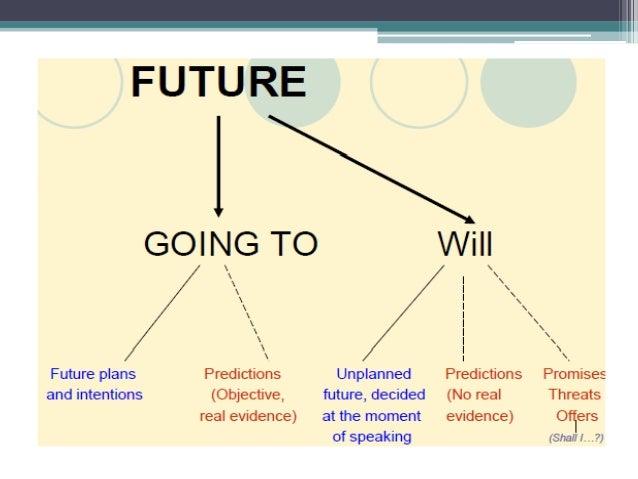
When we want to talk about future facts or things we believe to be true about the future, we use 'will'.
- The President will serve for four years.
- The boss won't be very happy. (won't = will not)
- I'm sure you'll like her. (you'll = you will)
- I'm certain he'll do a good job. (he'll = he will)
If we are not so certain about the future, we use 'will' with expressions such as 'probably', 'possibly', 'I think', 'I hope'.
- I hope you'll visit me in my home one day.
- She'll probably be a great success.
- I'll possibly come but I may not get back in time.
- I think we'll get on well.
If you are making a future prediction based on evidence in the present situation, use 'going to'.
- Not a cloud in the sky. It's going to be another warm day.
- Look at the queue. We're not going to get in for hours.
- The traffic is terrible. We're going to miss our flight.
- Be careful! You're going to spill your coffee.
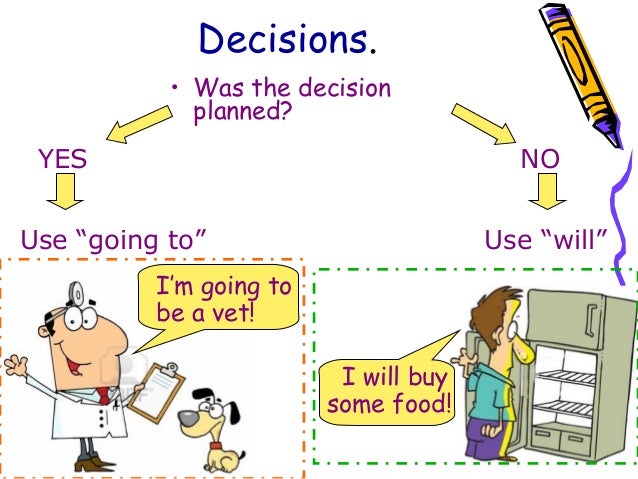
At the moment of making a decision, use 'will'. Once you have made the decision, talk about it using 'going to'.
- I'll call Jenny to let her know. Sarah, I need Jenny's number. I'm going to call her about the meeting.
- I'll come and have a drink with you but I must let Harry know. Harry, I'm going to have a drink with Simon.
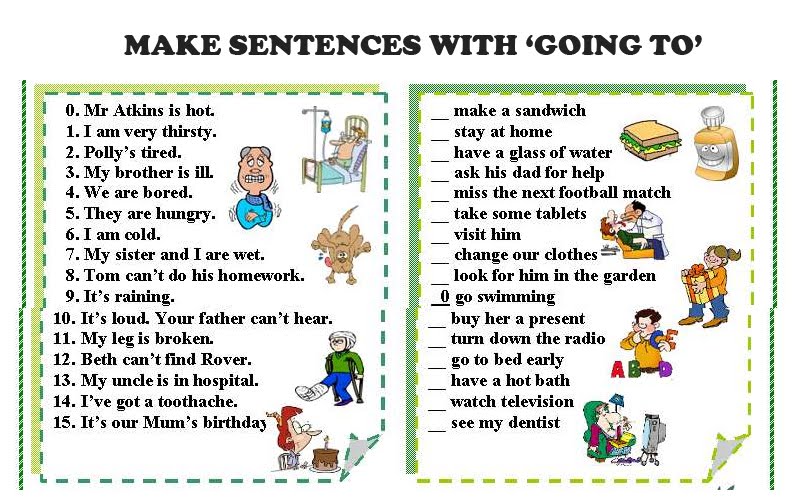
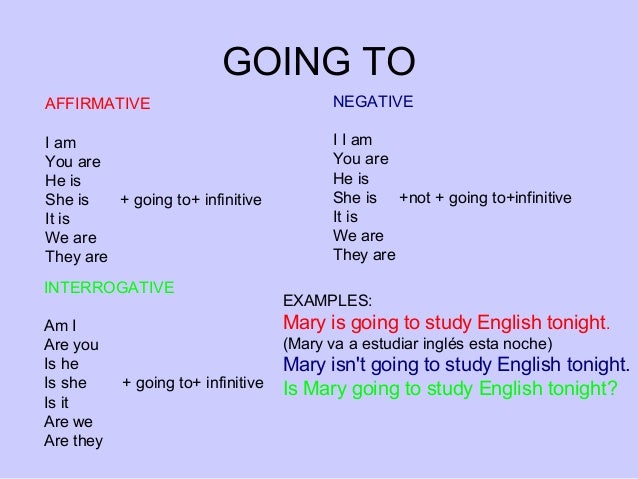
CLICK ON THE PICTURE AND STUDY: WILL AND TO BE GOING TO.


jueves, 1 de diciembre de 2016
COUNTABLES / UNCOUNTABLES

COUNTABLE NOUNS.
Countable nouns are easy to recognize. They are things that we can count. For example: "pen". we can count pens. We can have one, two or three pens or maybe more.
Here are some jmore contable nouns:
- dog, cat, animal, man, person.
- bottle, box, litre.
- coin, note, dollar.
- cup, plate, fork.
- table, chair, suitcase, bag.
COUNTABLE NOUNS CAN BE SINGULAR OR PLURAL:
My dog is playing.
My dogs are playing.
WE USE THE INDEFINITE ARTICLE A/AN WITH COUNTABLE NOUNS:
A dog is an animal.
WE CAN USE SOME AND ANY IN COUNTABLE NOUNS.
I have got some pens.
Have you got any pens.
When can I use HOW MUCH or HOW MANY?


UNCONTABLE NOUNS.
Uncontable nouns are substances, concepts... that we cannot divide into separate elements. We cannot "count" them.
We can count "bottles of water", but cannot count "water" itself:
You cannot count.
- music, art, love, happiness.
- advice, infortmation, news.
- furniture, luggage.
- rice, sugar, butter, water.
- electricity, gas, power.
- money, currency.
WE USUALLY TREAT UNCOUNTABLE NOUNS AS SINGULAR. WE USE A SINGULAR VERB:
This news is very important.
Your luggage looks heavy.
WE CAN USE SOME AND ANY WITH UNCOUNTABLE NOUNS:
I've got some money.
Have you got any rice?
PRINTABLE ACTIVITY:
Download this .pdf

HERE ARE SOME MORE EXEMPLES OF COUNTABLE AND UNCOUNTABLE NOUNS.
Countable
|
Uncountable
|
dollar
|
money
|
song
|
music
|
suitcase
|
luggage
|
table
|
furniture
|
battery
|
electricity
|
bottle
|
wine
|
report
|
information
|
tip
|
advice
|
journey
|
travel
|
job
|
work
|
view
|
scenery
|
PRINTABLE ACTIVITY:


TO BE
Practise the verb to be.
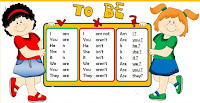

In each picture you can do and print different activities and revise the grammar.

INTERACTIVE GRAMMAR LESSON:


In each picture you can do and print different activities and revise the grammar.
INTERACTIVE GRAMMAR LESSON:
Suscribirse a:
Entradas (Atom)